The King James Mencius
A translation that could have been

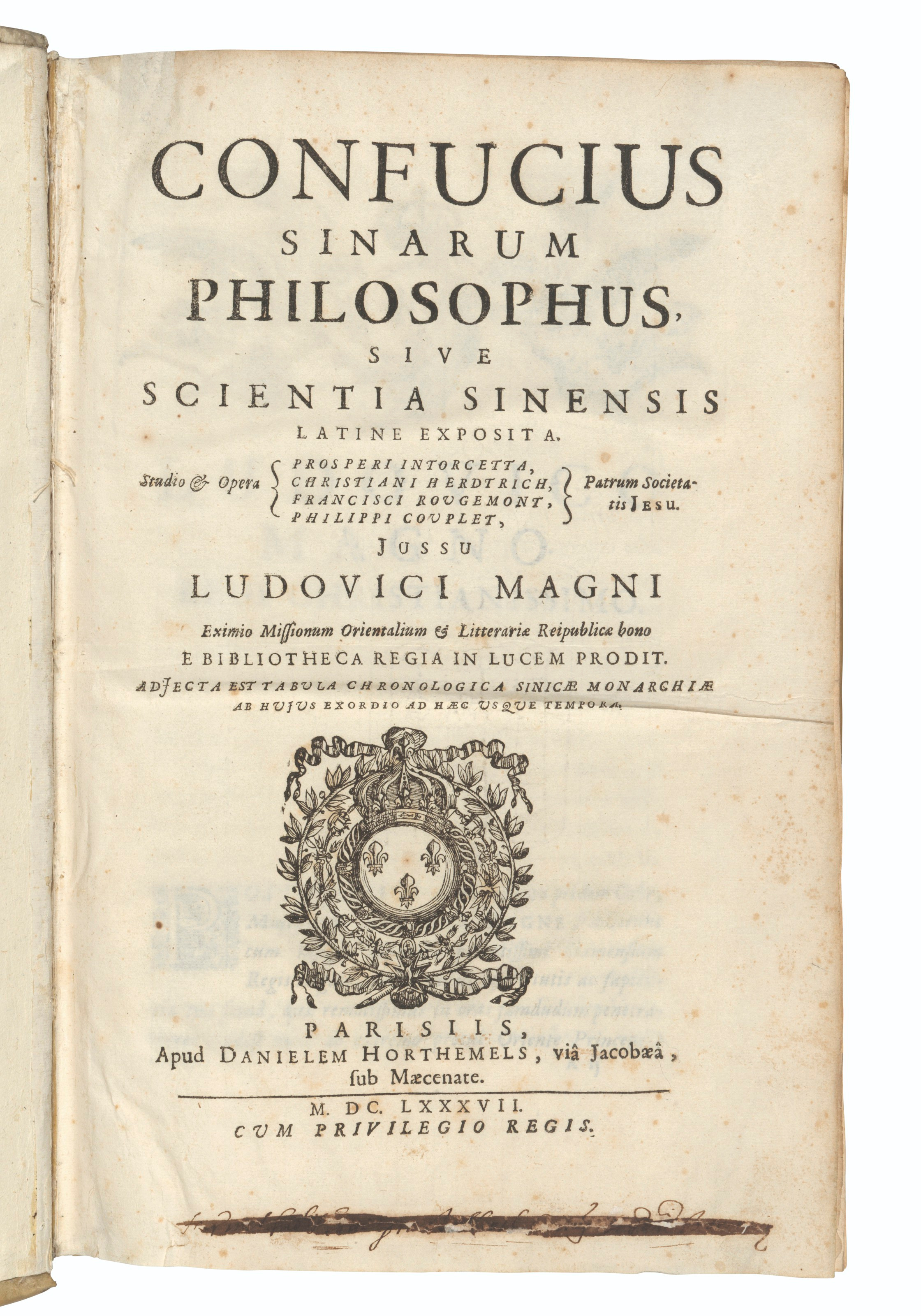
This project approaches the Confucian classics from an unusual angle, by rendering the them into King James-style English prose, focusing on the Mencius. Classical Chinese is an highly compact, context-sensitive language, and the texts are rich in parallelism, dry humor, and the kind of punchiness that has furnished modern Chinese with as many idioms as the Bible has given to modern English. A Jacobean English register offers a useful set of tools for gesturing toward these qualities. Its slightly awkward syntax, familiar-but-archaic vocabulary, and occasional startlingly vivid everyday phrase approximate, for an English reader, something of the experience a modern Chinese reader has when approaching the classical texts. The Mencius, in particular, presents striking thematic and narrative affinity; like much of the biblical corpus, it presents a traveling moral teacher moving from court to court, reasoning with rulers through aphorism and parable, rebuke and exhortation.
This is very much a hobby project rather than a work of professional sinology. I am not a trained classical Chinese scholar, nor is this an attempt at a definitive or academically authoritative translation. It is instead a playful and exploratory exercise: a way of seeing what emerges when one venerable tradition is filtered through another.
The first translations of the Confucian canon by Europeans were written by Catholic priests, writing in Latin, the universal language of Western scholarship. One might imagine, however, a slightly altered history: a seventeenth-century England more deeply engaged with China, a bright young Protestant missionary-scholar, a Mencius rendered for the same Jacobean audience that heard Isaiah and Ecclesiastes aloud at the lectern. This project is a translation that could have been, a playful exploration of what that lost tributary of intellectual history might have sounded like to its modern descendants.
This will be an occasional project, with the text updated on this page as additional sections are translated.
Book 1: The First Book of King Hui of Liang
Chapter 1
1 And it came to pass that Mencius went up unto Hui, King of Liang.
2 And the king said, Venerable sir, thou hast journeyed many leagues to come unto us; hast thou counsel to bring gain unto my realm?
3 Then Mencius answered and said, Why dost thou speak of gain? Is there not righteousness and mercy only?
4 When the king saith, “What shall bring gain unto my realm?” the princes will say, “What shall bring gain unto my house?” and the people will say, “What shall bring gain unto my person?” Great and small alike shall contend for gain, and the land shall fall into peril.
5 In a realm of ten thousand chariots, he that lifts up hand against the king is ever the master of a thousand; in a realm of a thousand chariots, he that lifts up his hand against the king is ever the master of a hundred. A thousand out of ten thousand, or a hundred out of a thousand, is no mean portion. Yet if men set gain before righteousness, they will not cease from taking till nothing remaineth.
6 For never hath there been a man of mercy who forsook his kindred, nor a man of righteousness who set his lord behind him. Therefore let the king speak only of righteousness and mercy; wherefore should he speak of gain?
Chapter 2
1 Again Mencius came before the king. And the king stood by the marsh, and looked upon the wild geese and the deer, and said, Do the worthy also delight in these?
2 And Mencius answered: Only the worthy delight in these. The unworthy, though they have them, delight not.
3 For it is written in the Book of Songs:
The king laid out the Spirit Terrace;
He laid it out and ordered it.
The common people labored at it;
Ere many days it was finished.
He laid it out, yet pressed them not;
The people came as children to a father.
The king was in the Spirit Park:
The does lay at rest;
The does were sleek;
The white birds shone bright.
The king was at the Spirit Pond:
The fish were full, and they leaped.
4 King Wen made the terrace and the pond by the strength of the people, and the people rejoiced in them. Therefore they named his terrace the Spirit Terrace, and his marsh the Spirit Pond; and they rejoiced that he had deer and fish and turtles.
5 The men of old shared their joy with the people; therefore they had joy.
6 But in the “Oath of Tang” it is said:
When will this our sun perish?
We will perish with thee.
7 The people were willing to die, if only King Jie might be destroyed. Though he had terraces and ponds, birds and beasts, how could he delight alone?
Chapter 3
1 And the king said: As for me, in governing my realm, I have given it my whole heart. When famine struck in the west, I removed the people unto the east and sent grain unto the west; and when famine struck in the east, I did likewise. I examine the governance of neighboring states, and none shows care equal to mine. Yet the people of neighboring states do not decrease, neither do my people increase. Wherefore is this?
2 And Mencius answered and said: The king delighteth in war; suffer me to liken it unto war. When the drums sound and blades are crossed, some cast away their armor and drag their weapons as they flee. One stoppeth after a hundred paces; another after fifty. If he that stopped at fifty mocketh him that stopped at a hundred, how is it?
3 The king said: That may not be. He fled not a hundred paces—yet he fled.
4 Mencius said: If the king knoweth this, then let him not look for his people to be more than those of neighboring states.
5 If the seasons of husbandry be not violated, grain shall be more than men can eat; if fine nets enter not the deep pools, fish and turtles shall be more than men can eat; if axe and blade enter the forests in season, timber shall be more than men can use.
6 When grain and fish are more than men can eat, and timber more than men can use, the people shall nourish the living and bury the dead without regret. To nourish the living and bury the dead without regret—this is the beginning of the kingly way.
7 Let there be a homestead of five acres, planted with mulberry trees, and those of fifty years may be clothed in silk. Let chickens, pigs, and swine be raised in their proper seasons, and those of seventy years may eat flesh. Let there be fields of a hundred acres, and let not their seasons be taken away, and households of many mouths shall be free from hunger.
8 Let the teaching of the schools be made diligent, and let it be upheld by the duties of filial piety and brotherly respect, and the grey-haired shall not bear burdens upon the roads.
9 When those of seventy are clothed in silk and eat flesh, and the common people neither hunger nor freeze, then for their ruler not to be king—such a thing hath never been.
10 But now dogs and swine eat the food of men and there is no restraint; corpses lie famished in the roads and there is no relief. When men die, it is said, “It was not I; it was the year.” How is this different from stabbing a man and killing him, and saying, “It was not I; it was the weapon”?
11 Let the king lay no blame upon the year; then all under Heaven shall come unto him.
Excellent. Keep it up.