
Millions of parents put their children in piano or violin lessons for perfectly sound reasons. Music teaches discipline, it develops the mind, it gives them an appreciation for beauty. Perhaps most of all, parents hope that music will enrich their children’s lives. But oddly, parents rarely ask: what exactly is my child being trained to become? The answer embedded in most music education is clear: a virtuoso individual performer.
From the rudiments of technique, the child learns increasingly difficult pieces. They progress through levels, pass examinations, give recitals, and audition for orchestras. Critically, even these ensembles are organized around individual prowess: better individual performance qualifies them for more prestigious ensembles, which lead to still more demanding repertoire.
Parents say, “I don’t expect my child to become a concert pianist. I just want them to have music in their life.” Yet we educate them using a system whose implicit ideal is the concert pianist.
Imagine two adults. The first took piano lessons for ten years. He can still play several difficult pieces he learned as a teenager – a nice party trick. But he cannot easily sight-read an unfamiliar piece, accompany a singer, play by ear, improvise, or sit down with other musicians and join in. The second may be technically less accomplished. But he can sight-read music, sing in harmony, accompany a song, learn a tune by ear, and pick up an instrument to join other people.
Who received the better education? Whose adult life is actually enriched by music?
The first pianist is a far too common sight – ten years climbing a ladder of increasingly difficult repertoire, only to step off the ladder at eighteen and never find another reason to play. This is natural and unsurprising – we optimized them for recitals. Adult life does not contain very many recitals.
There was another ideal that once occupied a much more prominent place in musical education: the talented amateur. The educated gentleman of the eighteenth century might learn music not because he intended to become a concert artist, but because music was something educated people did. He might play keyboard, violin, flute, or cello; regardless, he would be expected to play with friends, participating in a domestic ensemble or an informal gathering. The social goal was not to perform an extremely difficult piece flawlessly before an audience. It was to participate in music as a part of sophisticated everyday life.
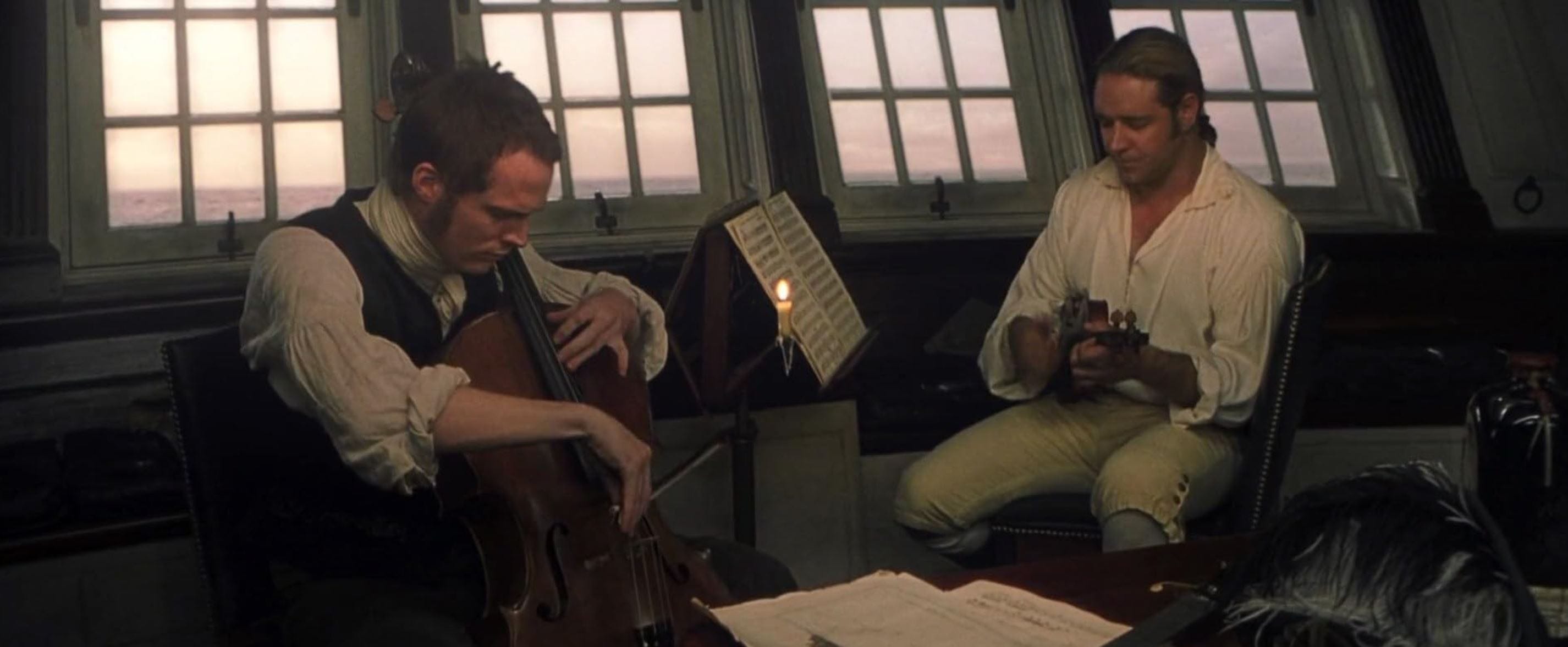
Imagine friends after dinner. Someone produces sheet music. One picks up a violin, another a cello, another sits at the keyboard. They play a Mozart quartet or trio. Nobody auditioned for their part, and nobody expects perfection. The pleasure lies in hearing the music and making it together. The image of doing this – for pleasure and not as an assignment – is almost alien to us today.
Indeed, children studying Mozart today are often doing so in a way – and in a social environment – that Mozart himself might barely recognize. They practice alone, perfect a work under the supervision of a specialist teacher, and eventually perform it for an audience of non-musicians who sit silently and listen. Mozart’s world certainly had its virtuosos. But it also had a much richer continuum between professional performance and ordinary social life.
Over the nineteenth century, concert performance became increasingly professionalized. The virtuoso performer – Paganini, Lizst, Rachmaninoff – became a distinct cultural hero. Technical standards rose. The gap between performer and audience widened. Then came the phonograph and radio, and the separation became complete. For most of human history, if you wanted music in your house, somebody had to make it. Once recorded music became common, we had infinite recorded music at our fingertips. Music-making – except at the very peak of virtuosity – had become optional.
So why do parents (correctly) assume there is still value in learning to make music? Let us take their stated goals seriously. They don’t necessarily want their children to attend Juilliard. They want them to appreciate music, to enjoy it, to have a lifelong hobby. They would like to have friends who make music and participate in a community – to retain music as a source of pleasure and accomplishment throughout adulthood. These are fine goals, but they require a different definition of musical success.
Our conventional system asks its graduates what recital pieces they have learned and what orchestra they qualified for. These are reasonable questions if the goal is to identify exceptional performers. But perhaps the more important questions are: can he open unfamiliar music and make sense of it? Can he sing in harmony, accompany a friend, improvise on a theme, and play a tune by ear? In short – is he equipped to creatively and socially make music without an adult telling him what to do?
If our goal is to enrich our children’s adult lives with music, we need to aim at a different – and in some ways more demanding – vision of musical competence.
The best analogy may be ordinary literacy. We do not teach children to read so that they may become bestselling novelists; we teach them to read so that written language becomes part of their lives. We want adults who can read novels, newspapers, essays, and technical documentation. We want them to write emails and memos, arguments and stories. We want them to use language independently as a tool to understand and navigate the world. Nobody thinks a literary education has failed because the child never learned to declaim Cicero with perfect intonation.
Musical education should work similarly. A musically literate person should be able to play music, but also to hear and understand it. They should be able to sing, improvise, perhaps compose. And they should be able to make music with other people.
We want to produce successful amateurs, not washed-out virtuosos. Adults who can join a community orchestra or church choir, who can accompany a singer, who play carols at Christmas. Adults who know other people who play and who can pull an instrument out of the closet when friends come over.1
Many parents are understandably drawn by the idea that musical education provides access to an exclusive world of cultivated accomplishment. Musical literacy is a way of actually living it.
In pursuit of this goal, not everything needs to change. Children still need good teachers. They need scales and bow holds and finger exercises. The fundamentals still matter, and the first few years of mastering technical skills may look very much the same. But the priorities and orientation would subtly shift.
Children would play with others from the beginning, rather than waiting until they were “good enough.” Beginners would sing, play drones, rhythms, simple bass lines, and easy ensemble parts. They would sight-read often. The goal would be fluency rather than perfection.
Every child would learn to sing. Everyone would learn enough piano to see harmony and understand what other instruments are doing. They would learn chords, transposition, accompaniment, improvisation, and music by ear alongside conventional notation. They would maintain a large repertoire of easy music rather than spending all their time polishing a few increasingly difficult pieces.
And most importantly, they would regularly gather to make music for no particular reason. Not a recital or audition, not as an hour of daily practice, but just because there are instruments in the room and other people who know how to play them. In additional to recitals, they would seek out opportunities to participate in orchestras or especially smaller chamber music ensembles, not because they are exclusive but because ensemble play is a vital part of how music gets made.
And perhaps we need a different way to measure the success of music education. Forget, for a moment, grades and competitions and prestigious orchestras. Put six reasonably musical children in a room with six instruments and a stack of unfamiliar music.
Can they choose a piece? Can they figure out who plays what? Can they simplify a difficult part, play in harmony while listening to one another, and after the inevitable mistake, can they keep going? Most of all – can they enjoy it? That may be the test that matters most.
The goal of music education should not be to push every child as far as possible toward individual virtuosity before they eventually stop. It should be to give them enough musical competence that – in their joy in music – they never want to. We want to produce not almost-professionals, but fully-realized amateurs, with a love for music and the skills to continue making it. When our children grow up, music should not be something they once studied but something they do, woven into the fabric of their everyday lives.
There were also other social uses from time to time…
Eighteenth-century conduct books, such as Thomas Gisborne’s Enquiry into the Duties of the Female Sex (1797), recommended that young women of the gentry pursue “ornamental acquisitions” such as dance, music, drawing, and languages such as French and Italian that would provide “innocent and amusing occupations” for herself and her family (80). Naturally, such accomplishments made a young woman all the more appealing for marriage. The countless four hand piano arrangements that date from this period were not utilized simply for the greater exploration of musical art but as a wonderful excuse for a young man and woman to sit very close at the keyboard.
Totally agree. Every kid should be encouraged to be in a band. You quickly learn that the 'unit of performance' isn't the recital piece, it's the *song*. (And most of the songs that we all love are *really simple*.) Success is that you have a great time playing, and people sing along, or dance, or just dig it. It's more 'look at us all, alive, here and now, enjoying the shit out of this moment', I do think we've informally got better at this over the last 10 years or so - ukuleles, plus YouTube, has created a kind of new canon of 'folk songs'. If you can sing well enough, know some basic chord theory, and can play an instrument that can accompany other, you've got music for a life.
I’m a college piano teacher. I get a lot of non-majors in my studio, and while I do teach them some basic music reading, I spend way more time teaching them how to pull up chord sheets of their songs and sit down at the piano and play them for themselves.
So many of my students who only learn to read notation stop playing when they stop lessons. The ones that can hear a song they like, google some guitar chords, and play the song off that information keep playing forever.